Inngest × cubic
Inngest x cubic, 51% fewer false positives through multi-agent orchestration
51% reduction in false positives
blind log-grepping to fine-grained observable traces
Members read free
Unlock the full breakdown
Enter your email to open every case study in the library: the full screenshot, why it works, and the one thing worth stealing. One email unlocks all of them.
Free. No spam. Unsubscribe anytime.
You're in — enjoy the library.
Why it works
The case study anchors on a concrete, attributable metric (51% false positive reduction) and traces it directly to a specific architectural change (single agent to multi-agent) enabled by Inngest. The before-state is well described: silent failures, manual log-grepping, and serverless timeouts with no visibility. This story sits at the boundary of Efficiency and New Capability because the multi-agent architecture was not merely faster but genuinely a new operating model; the headline metric (a number going down) tips it to Efficiency as primary.
Steal this
Linking a product quality metric (false positive rate) to an infrastructure decision gives the case study a defensible, specific number without relying on revenue or time-saved claims that early-stage startups often cannot share.
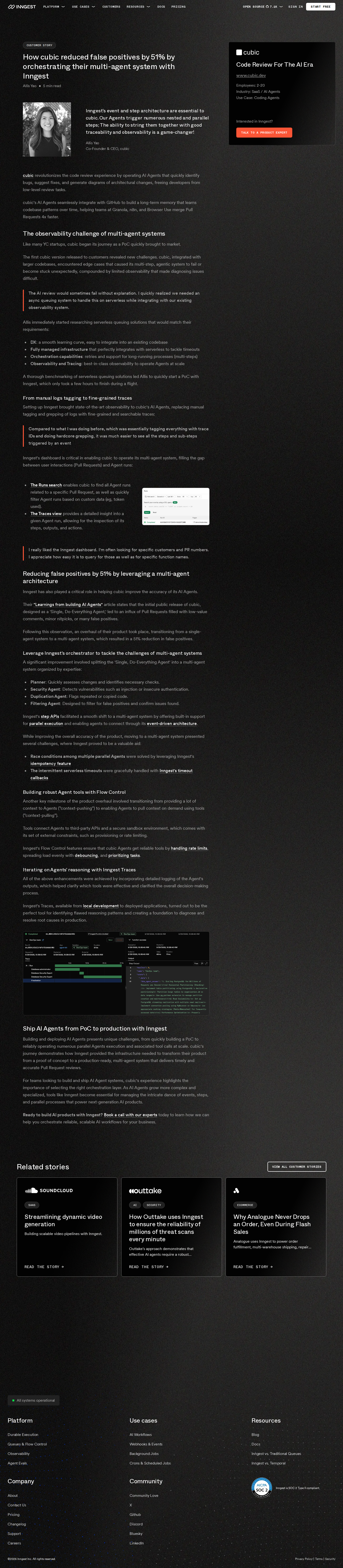 Click to enlarge ↗
 This is editorial commentary and curation. The case study, screenshot, and all metrics are Inngest's published work; we link to the source and lead with our analysis.