Melio × QBench
Melio x QBench: 16 hours a week back from payment busywork
16 hours saved per week
Fragile, manual payment process to streamlined cash flow control
Members read free
Unlock the full breakdown
Enter your email to open every case study in the library: the full screenshot, why it works, and the one thing worth stealing. One email unlocks all of them.
Free. No spam. Unsubscribe anytime.
You're in — enjoy the library.
Why it works
The case study grounds its claims in a specific, believable number (16 hours per week) and ties it to a concrete operational change: replacing manual international wire transfers with vendor-self-service payment entry. The 60-day float mechanism is explained clearly enough that a reader can see exactly how the cash flow benefit works. There is a mild coin-flip between Efficiency and New Capability, since paying international contractors at all was impractical before, but the headline leads with time savings so Efficiency wins.
Steal this
Explain the financial mechanism in the customer's own words. Trevor's line about 60-day float as 'a form of short-term financing' makes an abstract product benefit concrete and credible without requiring a hard dollar figure.
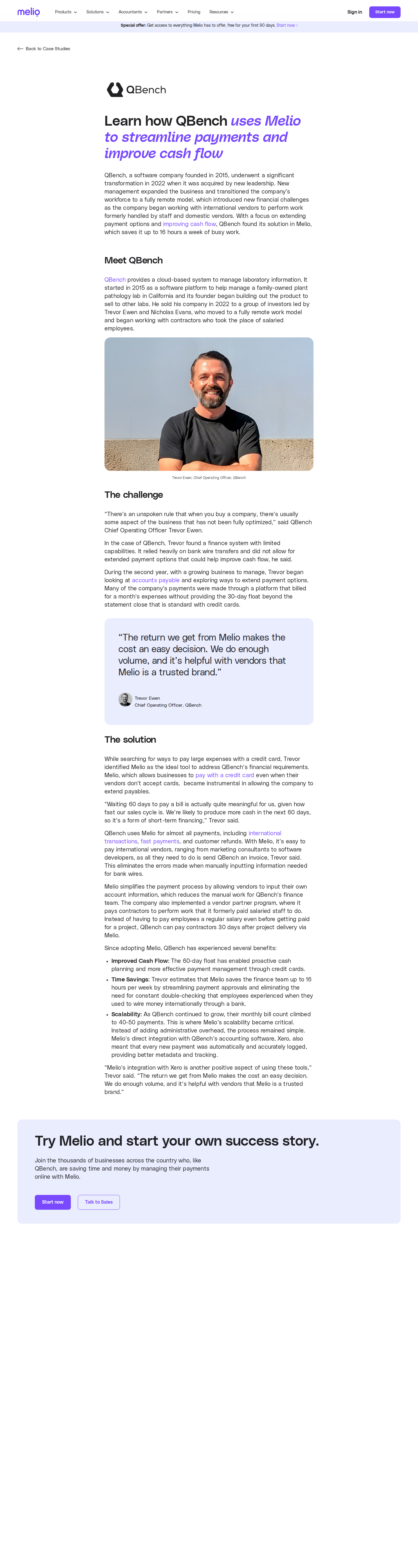 Click to enlarge ↗
 This is editorial commentary and curation. The case study, screenshot, and all metrics are Melio's published work; we link to the source and lead with our analysis.