Pocus × Linear
Pocus x Linear: Signal-based selling drives 30% larger deals
30% increase in average deal size
Tedious manual prospecting to targeted, high-response pipeline
Members read free
Unlock the full breakdown
Enter your email to open every case study in the library: the full screenshot, why it works, and the one thing worth stealing. One email unlocks all of them.
Free. No spam. Unsubscribe anytime.
You're in — enjoy the library.
Why it works
The case study earns its headline number with a named customer, a named buyer, and a specific attributed metric. The before-state is concrete: Casey was spending most of his day identifying a handful of accounts using a manual database, and generic outbound risked damaging a beloved developer brand. The mechanism is clear enough to replicate: consolidate product-usage and intent signals into a single inbox, build conversion playbooks without engineering support, and let reps act on ranked accounts rather than prospect from scratch. The story leads with a number going up (deal size), so Breakthrough is the right primary tag, with Efficiency as a strong secondary given the hours-saved evidence.
Steal this
Quantify the reps' time saved alongside the revenue metric. Pairing '30% larger deals' with 'nearly 20 hours saved per week per rep' makes the ROI case on two dimensions and gives different reader personas (sales leaders and CFOs) each a number to care about.
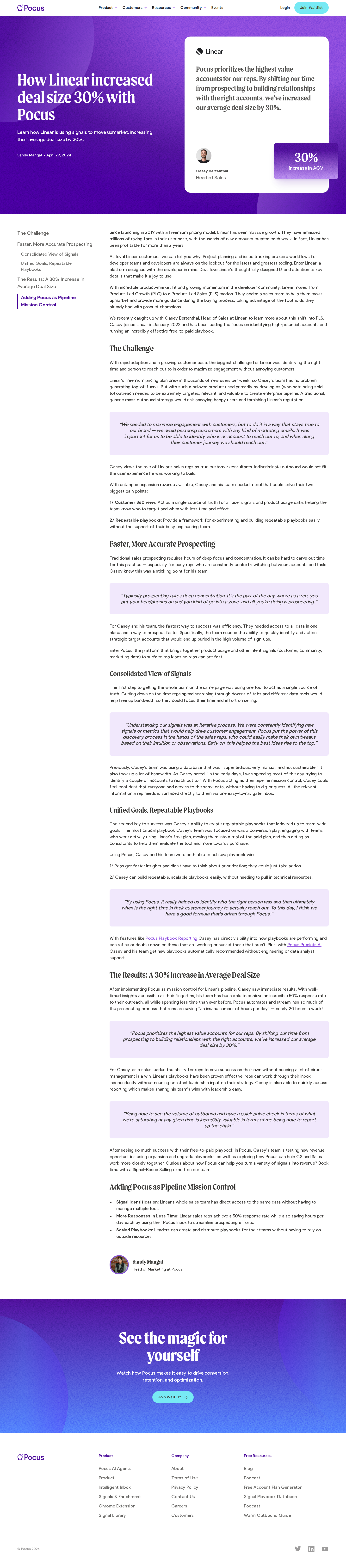 Click to enlarge ↗
 This is editorial commentary and curation. The case study, screenshot, and all metrics are Pocus's published work; we link to the source and lead with our analysis.