JetBrains TeamCity × Brave Software
TeamCity x Brave Software, replacing a CI system they could no longer trust
Constant firefighting to assumed reliability
Members read free
Unlock the full breakdown
Enter your email to open every case study in the library: the full screenshot, why it works, and the one thing worth stealing. One email unlocks all of them.
Free. No spam. Unsubscribe anytime.
You're in — enjoy the library.
Why it works
The case study earns its Resilience tag because the before-state was an actively degrading system, not just a slower one. The mechanism is specific enough to be useful: Kotlin DSL for config-as-code, ephemeral EC2 agents via cloud profiles, and REST API orchestration for dynamic build fan-out are all named and briefly explained. The story is honest about what still needs work in TeamCity, which adds credibility, though the absence of any quantified outcome keeps it from scoring higher.
Steal this
Acknowledging product gaps openly within the case study. Brave's team 'openly point out what still needs work in TeamCity' and the vendor responds by noting upcoming fixes. This transparency makes the praise land harder and the vendor look confident.
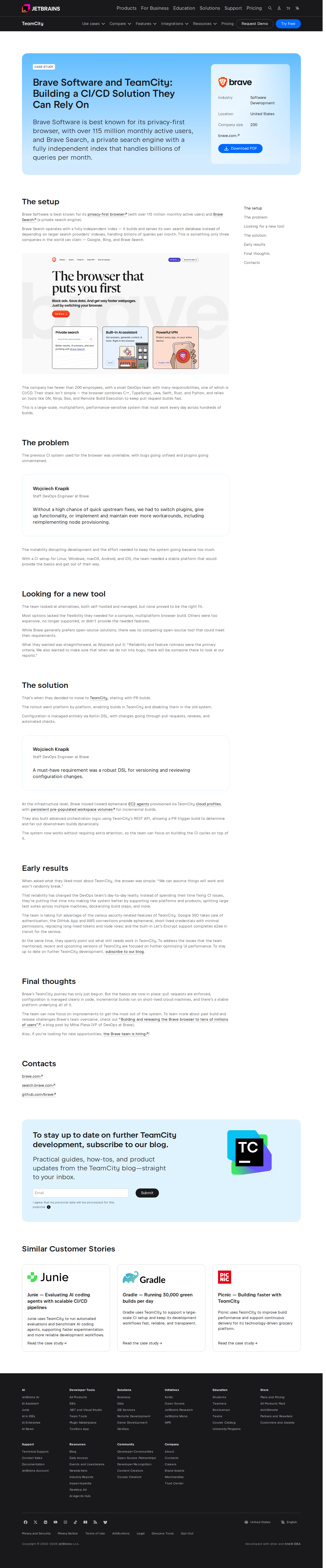 Click to enlarge ↗
 This is editorial commentary and curation. The case study, screenshot, and all metrics are JetBrains TeamCity's published work; we link to the source and lead with our analysis.