Temporal × DigitalOcean
Temporal x DigitalOcean, half the engineers, a tenth of the code
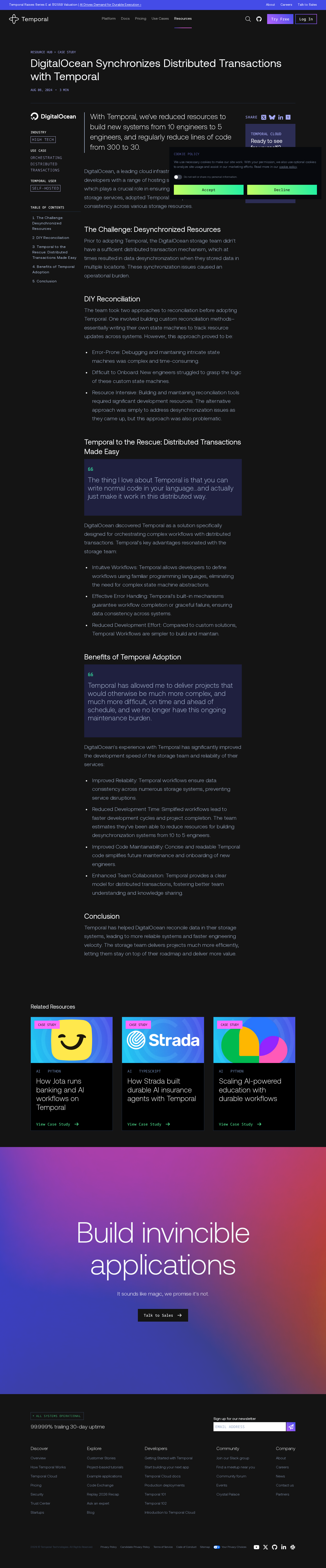
Engineering resources to build new systems reduced from 10 to 5 engineers; lines of code reduced from 300 to 30
Maintenance burden and synchronization chaos to reliable, fast delivery
Members read free
Unlock the full breakdown
Enter your email to open every case study in the library: the full screenshot, why it works, and the one thing worth stealing. One email unlocks all of them.
Free. No spam. Unsubscribe anytime.
You're in — enjoy the library.
Why it works
The case study leads with two concrete numbers (10 to 5 engineers, 300 to 30 lines of code) that make the efficiency gain tangible and comparable. The before-state is specific: custom state machines that were error-prone and slowed onboarding, not a vague 'inefficiency.' The secondary Resilience angle is present because the core problem was data desynchronization causing service disruptions, but the headline framing leads with resource reduction.
Steal this
Pair a headcount reduction metric with a code-volume reduction metric side by side. Two numbers in one sentence make the efficiency claim harder to dismiss than either number alone.
 Click to enlarge ↗
 This is editorial commentary and curation. The case study, screenshot, and all metrics are Temporal's published work; we link to the source and lead with our analysis.